How Circuitwise strengthens reliability through advanced test systems
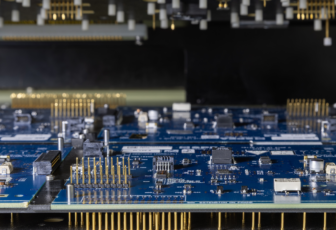
Circuitwise & ASL apply these principles by integrating test system development directly into its manufacturing services. We work collaboratively with our customers to design for testability, putting every product through robust validation before shipment. This proactive approach mitigates manufacturing ambiguity, accelerates fault resolution, and reduces risk exposure. It delivers confidence that products will perform as intended reliably, repeatedly, and at scale.
This includes:
1. Automated Test Equipment (ATE) for high reliability builds where speed, repeatability, and diagnostic depth are essential
Circuitwise & ASL uses automated test equipment ATE to ensure every assembly is verified consistently and accurately before release. Our ATE platforms combine controlled electrical stimulus, automated measurement, and data capture to validate that each unit performs to specification. By automating these steps, we remove operator variability, improve throughput, and detect issues earlier in the process. All test data feeds into our traceability systems, supporting audit requirements and device history files across regulated industries ensuring that functional performance is checked the same way every time.
2. Custom test jig design tailored to suit each product’s electrical, mechanical, and firmware characteristics
We design and build custom jigs and fixtures to support in-circuit testing (ICT), functional testing (FCT), and reliable programming interfaces. Each fixture is engineered to provide stable electrical contacts, correct mechanical alignment, and safe, repeatable engagement with the PCBA. Because these are developed in-house alongside the test plans, they form a validated and scalable part of the manufacturing process ensuring every unit is tested consistently before release.
3. Test coverage optimisation that confirms every critical function is measured, validated, and documented
We work with customers to confirm that every critical function is measured, validated, and documented. This approach reduces ambiguity, supports fault isolation, and strengthens confidence in long-term performance and reliability.